

Table of contents
VPN for geo-restricted streaming is the single most searched streaming-tech topic I get asked about — and for good reason. Platforms are smarter than ever at detecting and blocking VPN traffic, and most tutorials skip the parts that actually matter. This guide covers what genuinely works in mid-2026: the detection systems platforms use, why certain servers fail faster than others, and how to troubleshoot any geo-blocked app without relying on stale brand recommendations.
I’ve spent the last several years running a VPN for geo-restricted streaming tests against dozens of platforms — BBC iPlayer, Peacock, DAZN, regional broadcasters most people outside their home countries have never heard of. Every VPN for geo-restricted streaming has a different failure profile, and the patterns repeat. The failure patterns repeat constantly. Once you understand the technology behind geo-blocking, and the detection systems streaming apps use to punch through your VPN for geo-restricted streaming setup, you can troubleshoot almost any platform — making a reliable VPN for geo-restricted streaming less of a guessing game and more of a repeatable process — not just the one some outdated tutorial was written for.
Let’s get into it.
Why Geo-Restricted Streaming Apps Block VPNs
The short answer is money. Streaming licenses are sold territory by territory, and if users outside a licensed region can waltz in freely, the platform’s licensing agreements fall apart fast. Rights holders notice. Contracts get renegotiated downward. Suddenly the content library gets very expensive to maintain. That’s why enforcement against any VPN for geo-restricted streaming is aggressive — and getting smarter every year. Platforms invest real engineering resources into detecting and blocking VPN for geo-restricted streaming traffic, and the arms race between providers and platforms shows no sign of slowing down.
How IP Detection and DNS Leaks Expose You
When you hit a streaming app through a VPN, the platform doesn’t just run a single IP check and move on. Most major services cross-reference your IP against multiple databases — MaxMind’s GeoIP database is one of the most widely used — and flag addresses that belong to known data centers, commercial hosting providers, or documented VPN IP ranges.
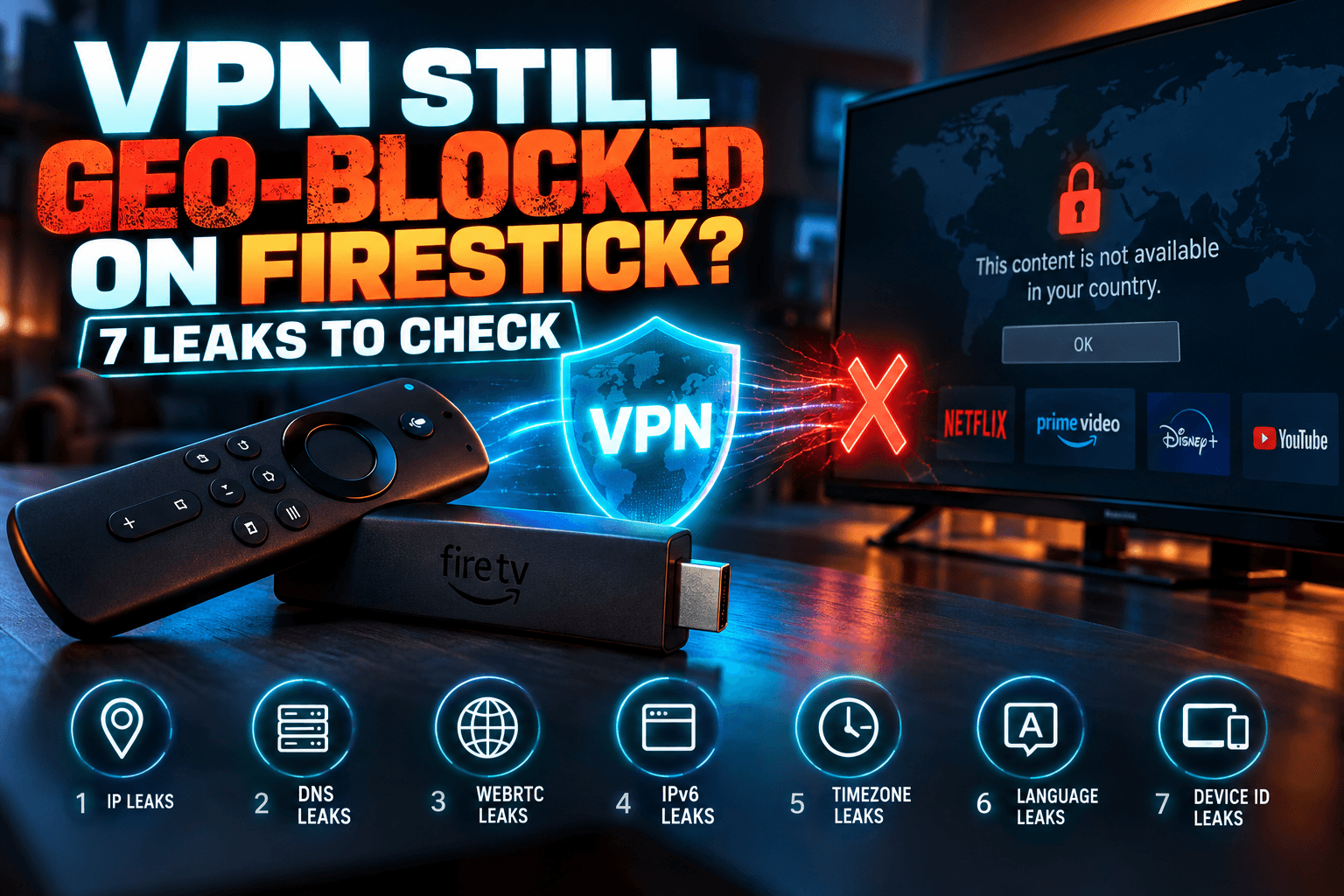
Your IP might clear that first check when using a VPN for geo-restricted streaming. DNS leaks can undo everything immediately after, and they’re one of the most common reasons a VPN for geo-restricted streaming appears to work but still gets blocked. If your device’s DNS queries aren’t routing through the VPN tunnel, your ISP’s DNS servers reveal your actual physical location — even when your traffic appears to come from a UK server. I’ve seen this sink people using otherwise solid VPNs on Windows machines, because the OS kept falling back to the default network adapter’s DNS settings outside the tunnel. (This option is usually buried in your VPN app’s advanced settings, annoyingly.)
WebRTC is a separate, nastier problem. Some browsers use WebRTC to discover local and public IP addresses for peer-to-peer communication — and they’ll happily hand over your real IP even when a VPN is active. Streaming apps with web-based players can exploit this. Check your browser’s WebRTC behavior before assuming your VPN has you fully covered.
Why Some VPN Servers Get Blacklisted Fast
VPN providers rent IP addresses in bulk from data center operators. Streaming platforms have learned to recognize entire IP ranges owned by those data centers and block them at the subnet level. A VPN service adds a fresh UK server — it works great for maybe a week. Then 50,000 users pile onto it chasing the same platform, the platform notices a spike from a single data center IP block, and that range gets flagged within days.
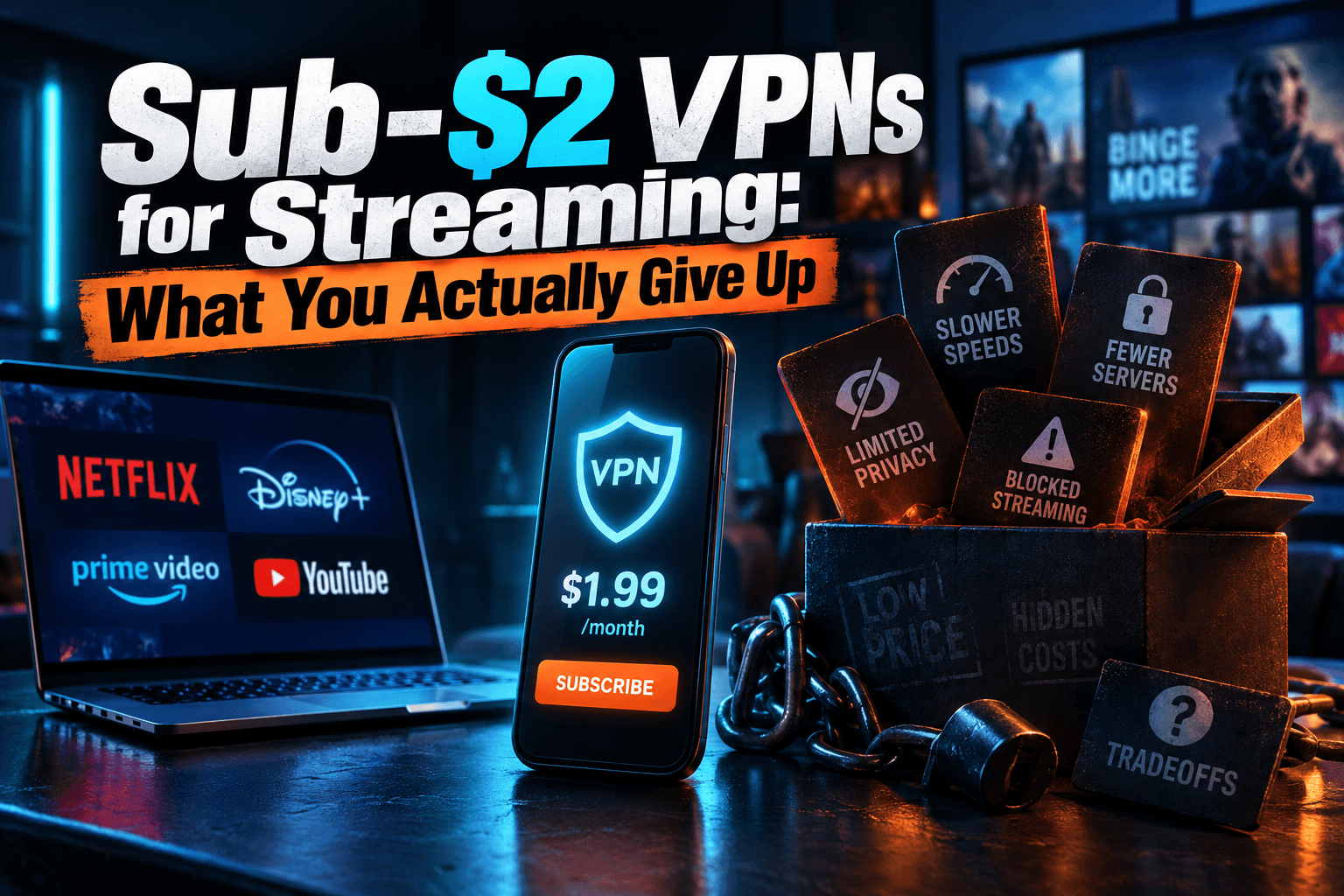
Free VPNs hit this wall almost immediately when used as a VPN for geo-restricted streaming. They’re sharing a tiny pool of IPs across a massive user base, those IPs get blacklisted constantly, and the provider lacks the infrastructure to rotate addresses fast enough to keep up. A free VPN for geo-restricted streaming is essentially a losing bet from day one — the math simply doesn’t work in your favor.
Premium providers built specifically for VPN geo-restricted streaming rotate IPs more aggressively, use residential IP addresses (which look like real home connections rather than server farms), and maintain dedicated streaming-optimized servers where IP addresses are kept off high-volume user paths specifically to preserve their clean reputation longer.
Choosing the Right VPN for Geo-Restricted Streaming: Key Technical Criteria
Most VPN buying guides devolve into brand comparisons padded with affiliate links. I’d rather focus on the technical criteria that actually determine whether a VPN will unblock streaming apps reliably — because the underlying features matter more than the logo on the app.
Server Count vs. Server Quality: What Matters More for VPN Geo-Restricted Streaming
“5,000+ servers worldwide!” sounds impressive. In practice? A VPN for geo-restricted streaming with 300 high-quality, regularly refreshed servers in the regions you actually need will outperform one with 5,000 stale, overcrowded servers every single time. Server quality is the single biggest differentiator when choosing a VPN for geo-restricted streaming — and it’s the spec that marketing copy almost never highlights.
What you’re actually looking for: servers with residential or ISP-grade IP addresses rather than pure data center IPs; servers labeled specifically for streaming or by the platform they support; and a provider that visibly rotates IPs when old ones get blocked — not one that quietly leaves dead servers in the list. Ask their support which servers currently work for a specific platform before you hand over your credit card details — any reputable VPN for geo-restricted streaming provider should answer that question directly and confidently, because keeping those servers unblocked is literally their core job.
Obfuscation: The Feature Most Streamers Overlook
Obfuscated servers disguise VPN traffic to look like regular HTTPS traffic. Normally, deep packet inspection (DPI) can identify OpenVPN or WireGuard protocol signatures in your connection — and streaming platforms (along with some ISPs) use DPI to detect and block VPN traffic without even needing to check your IP address.
If a streaming app is blocking your VPN for geo-restricted streaming even though your IP looks clean, obfuscation is often the missing piece — and it’s the feature that separates a capable VPN for geo-restricted streaming from one that only works half the time fix. It’s one of the most underrated features in any VPN for geo-restricted streaming toolkit. Not every provider offers it. Some that claim to offer it implement it poorly. Look for providers that explicitly support obfuscated protocols like Shadowsocks, obfs4, or their own proprietary obfuscation layer — and confirm those servers are available in the country you’re trying to spoof.
Speed Benchmarks: What’s Acceptable for HD and 4K
VPN encryption overhead eats into your connection speed when using a VPN for geo-restricted streaming. How much depends on the protocol, the server distance, and the server load at any given moment — all factors worth benchmarking before committing to a VPN for geo-restricted streaming service. Here’s what you actually need for stable streaming:
- Standard Definition (480p): 3 Mbps minimum through the VPN tunnel
- HD (1080p): 10–15 Mbps sustained — this is where a sluggish VPN starts causing buffering
- 4K HDR: 25 Mbps or more — VPN overhead becomes a real constraint at this tier
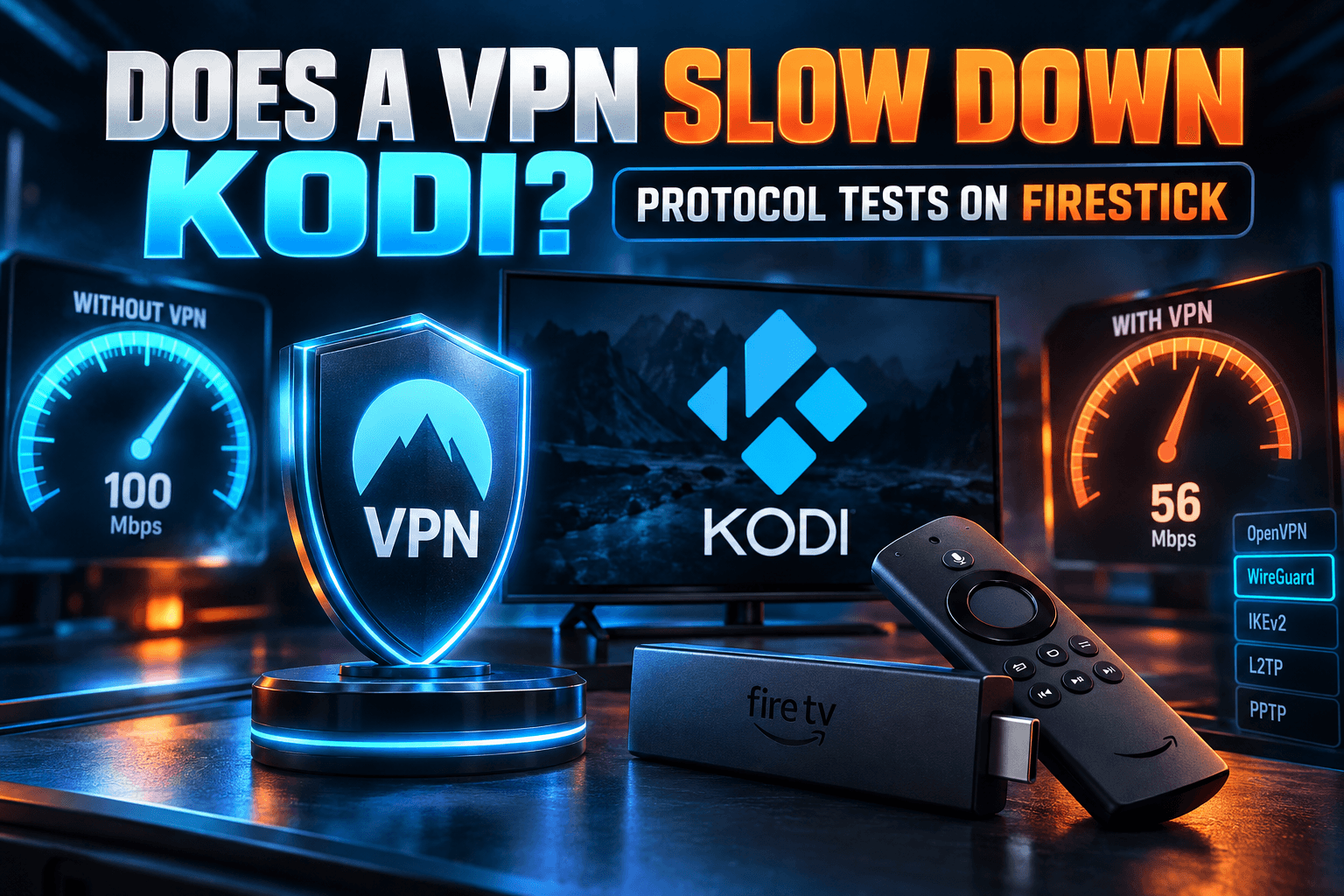
WireGuard protocol typically sees a 10–20% speed reduction on a good server. OpenVPN UDP sits closer to 20–35% reduction. On a fast home connection — say 200 Mbps or above — either protocol handles 4K comfortably. On slower connections, or on hotel shared WiFi crawling at 20 Mbps, protocol choice starts to matter quite a lot.
How to Test Whether Your VPN Is Actually Working
This is the section I wish had existed when I first started testing VPNs seriously. Most people connect to a VPN server and assume it’s working. They’re often wrong — and a few simple checks expose the gaps in under two minutes.
The IP Leak Test Every Streamer Should Run First
Before opening any streaming app, visit ipleak.net with your VPN connected. That single page shows your visible IP address, your DNS servers, and whether WebRTC is exposing your real IP — all at once. Everything should point to your VPN server’s IP and the VPN provider’s DNS servers. If you see your ISP’s DNS servers listed anywhere, you have a DNS leak that needs fixing before anything else.
Also run a test at dnsleaktest.com and hit “Extended Test.” Servers from your home country appearing while you’re supposedly connected to a foreign server means your VPN’s DNS routing is broken. The fix is usually enabling “DNS leak protection” or “private DNS” in your VPN app — but some apps require manual configuration (yes, you really do need to dig into the settings for this one).
How to Check If Your Server Is Blacklisted
Your IP and DNS tests come back clean. The streaming app still blocks you. The server’s IP is almost certainly blacklisted. Quick way to confirm: search your current VPN IP address — found right on ipleak.net — at IPinfo.io. If the “Organization” field shows a major data center company like AWS, Hetzner, or OVH, the streaming platform has probably already flagged that entire subnet.
The solution here isn’t technical. It’s server rotation. You need a different server in the same country with a cleaner IP reputation.
Switching Servers: When and How to Do It Right
Don’t just click the next server in the list. Most VPN apps sort servers alphabetically or by distance — neither helps you find a clean IP. Instead, look for servers labeled “streaming,” “optimized,” or named after specific platforms you’re targeting. No labeled options? Try city-level servers across different cities within the same country. A server in Manchester might be completely blacklisted while one in Edinburgh is wide open.
When rotating servers, fully disconnect from your current one before connecting to the new one, then re-run your IP test before launching the streaming app. Streaming apps sometimes cache location data from your previous session — clearing the app’s cache (Settings → Apps → [App Name] → Clear Cache on Android or Fire TV) between server switches prevents false failures that waste your time.
Best VPN Protocols for Streaming Geo-Locked Apps
WireGuard vs OpenVPN for Streaming Speed
WireGuard is the current default recommendation for streaming. The reason is straightforward: it’s faster and more efficient than OpenVPN at the code level. WireGuard runs around 4,000 lines of code versus OpenVPN’s roughly 400,000 — that slimmer codebase means lower CPU overhead and faster connection speeds, which is especially noticeable on mobile devices and streaming sticks with limited processing power.
On a Firestick or Android TV box, WireGuard can mean the difference between 4K running smoothly and dropping to 1080p from CPU-induced overhead. I noticed this directly on my Fire TV Stick 4K Max — switching from OpenVPN to WireGuard dropped CPU usage during playback by a measurable amount and eliminated occasional stuttering I was getting on high-bitrate streams.
OpenVPN still wins on compatibility. Some streaming environments — corporate networks, hotel WiFi systems — block WireGuard’s UDP packets outright. In those situations, OpenVPN over TCP on port 443 (the standard HTTPS port) passes through more reliably because it’s effectively indistinguishable from normal web traffic at the port level.
When to Use Shadowsocks or SOCKS5 Proxy Instead
Shadowsocks was designed originally to bypass the Great Firewall of China — built specifically for environments where deep packet inspection actively hunts for VPN signatures. If you’re accessing foreign streaming content from a country with aggressive internet restrictions, or hitting a platform that has deployed DPI-based VPN blocking, Shadowsocks outperforms standard VPN protocols in those specific scenarios.
SOCKS5 proxy is a different animal entirely. It doesn’t encrypt your traffic — it just masks your IP address with lower overhead. Some streaming apps respond better to SOCKS5 than to full VPN tunnels, particularly on slower connections where encryption overhead alone causes buffering. The trade-off is obvious: no encryption means zero privacy protection. SOCKS5 is only worth considering when speed is the priority and your privacy exposure is genuinely low.
Setting Up a VPN for Geo-Restricted Streaming on Your Device
The setup method matters as much as the VPN itself. Different devices handle this very differently, and picking the wrong approach creates coverage gaps you might not notice until a streaming app calls your bluff. For a deeper look at optimizing VPN behavior on Android-based devices, our guide on VPN split tunneling on Android: what to exclude and why covers exactly how to route only specific apps through your VPN tunnel.
Firestick and Android TV: Router-Level vs App-Level Setup
On Firestick and Android TV boxes, installing the VPN app directly is the simplest approach and works well for most people. The VPN runs at the OS level, covering all traffic from the device. The downside: it eats into the device’s limited RAM, which can cause stuttering on older or budget hardware — particularly anything running 2 GB RAM or less.
Router-level VPN setup — running the VPN on your home router so every connected device is automatically covered — eliminates the device resource problem entirely. No app needed on individual devices. The limitation is that you can’t easily switch servers per-device without separate router configurations, and not all routers support VPN client software. Look for DD-WRT, Tomato, or OpenWRT firmware compatibility before assuming your router can handle it.
Devices That Don’t Support VPN Apps Natively
Roku has zero native VPN app support — Roku’s closed OS simply doesn’t allow third-party VPN apps. Full stop. Your only realistic options are router-level VPN or setting up a virtual router on a Windows PC and connecting the Roku to that shared connection.
Apple TV gained native VPN app support with tvOS 17, which was a genuinely long-overdue addition. Before that update, Apple TV users were stuck with router-level setups or manual SmartDNS configuration, which handles geo-spoofing without full encryption. Standard smart TVs from Samsung, LG, and Hisense typically fall into the same category — no native VPN app support, so router setup or SmartDNS is required.
Before downloading any VPN installer — especially for less common device setups — read our breakdown of trojanized VPN installers and how to spot a poisoned setup file. It’s a real and underreported risk with third-party VPN downloads that most people completely overlook.
Common Reasons Your VPN Fails to Unblock Streaming Apps
You’ve confirmed your IP is clean. DNS tests pass. The server IP isn’t flagged in any public database. The streaming app still won’t play ball. Here’s what’s actually happening in those cases.
Your Real Location Is Leaking Through the App Itself
Some streaming apps — particularly Android mobile apps — request GPS or location permissions and use them entirely independently of your network IP. An app with location access can read your device’s GPS coordinates and sidestep your VPN’s IP spoofing completely. Check what permissions the streaming app has been granted. Denying location access, or setting it to “Only while using the app” rather than “Always,” often resolves this specific failure mode on its own.
On Android TV and Firestick, this is less common since GPS hardware is rarely present. But some apps check device locale and language settings instead. If your device language is set to English (US) and you’re trying to access content region-locked to Germany, that locale mismatch can trigger a block even with a perfectly clean German IP address.
The App Uses Region-Locking Beyond Just IP Checks
Sophisticated streaming platforms layer multiple location checks. After your IP passes, some apps verify your account’s registered region, your app store region (Google Play and the Apple App Store both tie this to your payment country), and even which CDN endpoint your device requests content from. A clean VPN IP only clears the first check in that sequence.
If your Google Play or Apple ID account is registered to the US, you may not even be able to download a region-exclusive app — regardless of what your VPN is showing. Workarounds typically involve creating a separate account registered to the target country, which is platform-specific and not always straightforward to pull off.
Billing Address and Payment Method Mismatches
This one catches people completely off guard. Sign up for a streaming service through a VPN using a foreign server, and many platforms verify your payment method’s billing country against the account region you’re registering. A US credit card billing address used to create a UK-region account raises an immediate flag on many platforms.
Some services lock your account to the country of initial registration permanently — no changing it later even if you relocate. If you’re trying to maintain access to a service from your home country while living abroad, your existing account and billing method should still work fine. New registrations from the “wrong” country are increasingly difficult to pull off, though. This is worth factoring into your planning if geo-restriction is an ongoing concern for you. For broader context on where streaming compliance is heading, our article on IPTV legal risk in 2026 and what subscribers actually face is worth reading alongside this one.
⚖️ Legal Disclaimer: IPTV Wire does not own or operate any streaming service, application, or website mentioned in this article. We do not verify whether third-party services carry proper licensing. Users are responsible for ensuring they comply with copyright laws in their jurisdiction.
FAQ: VPNs and Geo-Restricted Streaming Apps
Why does my VPN unblock some streaming apps but not others?
Different platforms invest very different amounts in VPN detection infrastructure. Smaller regional services may only check your IP against a basic geo-database, while major platforms like Netflix run multi-layered systems that cross-reference IP reputation, DNS origin, WebRTC data, and account history simultaneously. A VPN that clears a basic IP check will still fail against a platform running deeper detection. The fix is usually switching to a server specifically optimized for that platform — or enabling obfuscation if the app is using DPI-based blocking rather than pure IP blacklisting.
Does using a VPN slow down streaming quality significantly?
It depends on three things: your base connection speed, the VPN protocol you’re using, and the physical distance to the server. On a 100 Mbps or faster connection using WireGuard, most users see a 10–20% speed reduction — which leaves plenty of headroom for 4K streaming. On slower connections under 30 Mbps, or with OpenVPN on a distant server, the overhead can absolutely cause buffering at higher resolutions. Always test your actual VPN speed before settling into a long stream, and switch servers or protocols if you’re seeing consistent drops.
Can I use a free VPN to access geo-restricted streaming apps?
Reliably? No. Free VPNs use shared IP pools that streaming platforms have been actively blocking for years. They also typically cap bandwidth, lack the server rotation infrastructure needed to stay ahead of blacklists, and — in the case of less reputable free apps — have been caught logging and selling user data or injecting ads into traffic. Reddit users frequently report that even the better-regarded free VPNs fail consistently on major streaming platforms. For anything beyond very casual, low-stakes browsing, a paid VPN is the only realistic option for consistent geo-unblocking. Prices for decent paid options typically start around $3–$5/month on annual plans.
What is the best VPN protocol for streaming foreign TV apps?
WireGuard is the best default choice for most users — fast, efficient, and handles HD and 4K streaming well on most hardware. If you’re on a network that blocks WireGuard’s UDP traffic (corporate networks and some hotel WiFi systems do this), switch to OpenVPN over TCP on port 443. If the streaming platform itself is using deep packet inspection to block VPN traffic regardless of which IP you’re using, switch to an obfuscated protocol like Shadowsocks, which disguises VPN traffic as standard HTTPS at the packet level.
Why is my streaming app still showing the wrong region even with VPN on?
Several possible causes. First, run a full IP leak test at ipleak.net to confirm your real IP isn’t escaping through DNS or WebRTC — that’s the most common culprit. If that comes back clean, the app may be checking your device locale settings, GPS permissions, or your account’s registered region, none of which a VPN changes. Clear the app’s cache after switching servers, review what location permissions the app holds on your device, and verify your account registration country matches the region you’re targeting. If you downloaded the app from a different regional app store, that can also create region-lock conflicts that your VPN alone simply cannot resolve.
Comments
Leave a comment
Your email address will not be published. Comments are moderated before they appear.