

Table of contents
Is ClipBox APK safe to put on your Firestick in 2026, or is it one more repackaged app that’ll quietly stuff your streaming box with adware? That question lands in my inbox every few months, so I stopped guessing and lived with it for [DATA: number of days] days. I vetted the APK files, audited the permissions, logged every domain it talked to, and ran it on three different streaming boxes. This isn’t another install walkthrough. It’s what happens after you install it.
Still need to get it onto your device first? My Firestick sideloading guide for 2026 handles the setup side. This piece starts where that one stops.
The Short Answer: Is ClipBox APK Safe? What My Testing Found
I tested ClipBox version [DATA: APK version number] between [DATA: test start date] and [DATA: test end date]. Three devices, picked to cover the budget-to-premium range most readers actually own:
- Amazon Fire TV Stick 4K Max (2nd gen, 2023): 2GB RAM, 16GB storage, Fire OS 8. Usually around $60, often less on sale.
- Walmart Onn Google TV 4K Pro: 3GB RAM, 32GB storage, Google TV. Roughly $50 at most US Walmarts.
- NVIDIA Shield TV Pro: 3GB RAM, 16GB storage, Android TV 11. Old hardware (2019), still the one to beat.
The verdict, in four lines:
| Test | Result | Rating |
|---|---|---|
| Malware / authenticity scan | [DATA: e.g., how many of your download sources came back clean vs. flagged] | [DATA: Pass / Caution / Fail] |
| Permissions audit | [DATA: number of permissions requested, number you flagged as unnecessary] | [DATA] |
| Network behavior | [DATA: number of unique domains contacted, how many were ad/tracking] | [DATA] |
| Playback (Firestick vs. Android TV) | [DATA: one-line summary of which device performed best] | [DATA] |
Bottom line? If you’re asking is ClipBox APK safe, the file you download matters more than the app itself. A clean build and the clones floating around third-party sites can behave like two completely different programs that happen to share an icon. The sections below show you how to tell them apart, so you can answer ‘is ClipBox APK safe’ for the exact file on your device.
What ClipBox Actually Is (and Why It Keeps Disappearing)
ClipBox is an Android aggregator. It hosts nothing. It searches third-party websites and file hosts for links, then passes those links to a built-in or external video player, and that one design decision explains nearly everything about how it behaves, from how fast it is to the errors it throws.
Quick clarification, because people mix these up constantly. There’s an unrelated Japanese iOS app also called “Clipbox.” It’s a file and video manager on the App Store. This article covers only the Android streaming APK.
Where ClipBox Pulls Its Streams From
Open a title and ClipBox fires off queries to a list of scraper sources, which are websites that index video files hosted somewhere else. Whatever comes back gets collected, loosely sorted by quality, and dumped on screen. ClipBox has zero control over what those sources hold. It can’t tell whether they’re licensed or even still online.
That matters legally. Whether streaming a given title through an aggregator is lawful depends on where you live and who holds the rights. The US, UK, Canada, and EU countries all have different rules. Enforcement varies even more. You’re responsible for what you stream, so check your local laws before you press play.
Why Domains and Download Links Change So Often
Development on ClipBox has been patchy for years. When an official download page goes quiet, it leaves a gap. Mirror sites, “ClipBox+” variants, and “Pro” or “Mod” builds rush to fill it, usually run by people with no connection to whoever wrote the original app.
Those domains rotate constantly. Some get takedown notices. Others end up on court-ordered ISP blocklists, which are routine in the UK and showing up more often in Canada. A few just vanish when the operator gets bored. Every rotation gives someone a fresh chance to slip a modified APK into the chain. That’s the real safety risk with ClipBox, more than anything the original developers did.
Is ClipBox APK Safe? Spotting a Real Build vs. a Repackaged Clone
I pulled the APK from [DATA: number, e.g., four] different sources and lined them up side by side. Here’s the vetting process I use to answer ‘is ClipBox APK safe’ for any given file. You can repeat every step on your own PC in about 20 minutes.
Checking the Package Name and Signing Certificate
Every Android app carries a package name (its internal ID) and a signing certificate (a cryptographic fingerprint from whoever built it). Two APKs claiming to be the same app should share both. Mismatched certificates mean someone else signed the file. If you’re wondering is ClipBox APK safe, this is the first check that matters. And whoever signed it could have changed anything inside.
To check on a PC:
- Install the Android SDK Build-Tools, which include
apksigner. - Run
apksigner verify --print-certs clipbox.apkin a terminal. - Note the SHA-256 certificate digest.
- Repeat for each APK you downloaded and compare the digests.
Hate the command line? The free APK Analyzer built into Android Studio shows the same info in a GUI. It’s slower to load, but it works.
[DATA: what you found, e.g., how many of your sources shared the same certificate and which ones differed]
Running the APK Through VirusTotal
Next, upload each file to VirusTotal. It runs the file past roughly 70 antivirus engines at once. If you’d rather not upload the file itself, paste in its SHA-256 hash instead. On Windows, grab the hash with certutil -hashfile clipbox.apk SHA256. On Mac or Linux it’s shasum -a 256 clipbox.apk.
Read the results properly. When people ask me is ClipBox APK safe, they’ve usually just glanced at the red number. Don’t. One or two generic “riskware” flags show up on almost every sideloaded streaming app, because plenty of engines flag the whole category on principle. The detections that should actually worry you are named ones: trojans, droppers, or specific adware families with Android.Adware.* labels.
[DATA: your VirusTotal results per source, e.g., detection counts and the names of any flagged adware SDKs or malware families]
I walk through this whole routine in more depth in Are Downloader Codes Safe? How to Vet One Before Installing. It applies directly here, and it’s the same test I’d run any time someone asks is ClipBox APK safe. Most people grab ClipBox through a Downloader shortcode without ever checking where it points.
Red Flags in File Size and Version Numbers
You can catch a lot with no tools at all:
- Bloated file size. If one source’s APK is several MB bigger than the others at the same version number, something got added. Usually ad SDKs.
- Impossible version numbers. A site offering a “newer” version than any other source has ever listed? Be suspicious. Clone sites bump the number to look current.
- “Premium,” “Ad-Free,” or “Mod” labels. Almost always third-party repacks. The irony is that the “ad-free” ones tend to be the worst for hidden ads.
- Bundled installers. An
.exe, a ZIP stuffed with extra files, or an “installer” APK that then fetches ClipBox? Walk away.
[DATA: the file sizes and versions you observed across sources]
Permissions Audit: What ClipBox Asks For
A video aggregator needs very little. Internet. Somewhere to stash cache. The ability to keep the screen awake. Anything past that earns a second look. I’ve rated each permission below. Your build might ask for more or fewer, and that difference is itself a handy authenticity clue.
| Permission | Requested in my build? | Verdict | Why |
|---|---|---|---|
| INTERNET | [DATA] | Necessary | It can’t fetch links without it |
| ACCESS_NETWORK_STATE | [DATA] | Necessary | Checks whether you’re online before scraping |
| WAKE_LOCK | [DATA] | Necessary | Stops the screen from sleeping mid-video |
| Storage (READ/WRITE_EXTERNAL_STORAGE) | [DATA] | Reasonable | Used for downloads and subtitles, but you can deny it if you only stream |
| READ_PHONE_STATE | [DATA] | Suspicious | A TV app has no reason to read device identifiers; ad SDKs use it for tracking |
| ACCESS_FINE / COARSE_LOCATION | [DATA] | Suspicious | Streaming links don’t depend on your GPS position |
| GET_ACCOUNTS | [DATA] | Suspicious | Reads which accounts are signed in on the device |
| SYSTEM_ALERT_WINDOW | [DATA] | Suspicious | Allows drawing over other apps, a classic overlay-ad trick |
| RECEIVE_BOOT_COMPLETED | [DATA] | Suspicious | Lets the app launch at startup with nothing running on screen |
Permissions That Make Sense
Internet access, network state, and wake lock form the baseline. Storage sits in a gray zone. It’s legitimate if you use the download feature and pointless for pure streaming. I denied it on my Shield. [DATA: confirm whether storage denial broke anything in your testing]
Permissions That Don’t
Location, phone state, account access, overlays. These are the four that make me uneasy. Not one of them is needed to play a video, but every one is standard kit for advertising SDKs that build device profiles. If your APK requests them and an APK from a second source doesn’t, you’re very likely holding a modified build.
How to Revoke Them on Firestick and Google TV
On Fire OS (Firestick 4K Max):
- Go to Settings → Applications → Manage Installed Applications.
- Select ClipBox.
- Open Permissions and toggle off anything unnecessary.
On Google TV (Onn 4K Pro, Chromecast with Google TV):
- Go to Settings → Apps → See all apps.
- Select ClipBox → Permissions.
- Set each sensitive permission to Don’t allow.
The overlay permission (SYSTEM_ALERT_WINDOW) hides in its own menu. On Google TV, look under Settings → Apps → Special app access → Display over other apps. Fire OS moves it around between versions (yes, it’s still annoying in 2026), so dig through Accessibility or Special App Access until you find it.
Network Traffic Test: Who Is ClipBox Talking To?
Permissions tell you what an app can do. Network logs show what it actually does.
My Test Setup (Pi-hole and Router Logs)
My setup at home routes every streaming device through a Pi-hole DNS server on a Raspberry Pi tucked behind the TV. I cross-checked everything against my router’s connection logs too, since DNS alone can miss apps that hardcode IP addresses. Each device ran ClipBox in two phases:
- Idle: the app open on the home screen for [DATA: duration], untouched
- Playback: searching for and streaming content for [DATA: duration]
Want to replicate it? Point your streaming device’s DNS (or your router’s) at a Pi-hole, clear the query log, then open the Query Log tab and filter by the device’s IP. No Pi-hole? NextDNS’s free tier gives you a similar per-device log, capped at around 300,000 queries a month, which is plenty for a test like this. Full setup is in Is Your Android TV Box Phoning Home? How to Check.
Ad Networks, Trackers and Unknown Endpoints
[DATA: number of unique domains contacted during idle vs. playback]
[DATA: breakdown by category, e.g., scraper sources, ad networks, analytics or tracking, and unidentified domains, plus how often the top domains were queried]
Scraper traffic during playback is expected. That’s how the app finds links. Ad and analytics calls while idle are a different story entirely, because an app sitting untouched on your home screen has no business pinging trackers every few minutes. Spot unfamiliar domains with high query counts during idle? Block them in Pi-hole and see whether the app still works. In my experience with aggregators generally, it usually does.
Performance: Firestick vs. Android TV vs. Shield
Safety aside, ClipBox Android TV performance swings a lot depending on hardware. I ran each test [DATA: number] times per device and averaged the results.
| Metric | Fire TV Stick 4K Max | Onn Google TV 4K Pro | NVIDIA Shield TV Pro |
|---|---|---|---|
| Cold start time | [DATA] | [DATA] | [DATA] |
| Time to first links | [DATA] | [DATA] | [DATA] |
| Buffering events per hour | [DATA] | [DATA] | [DATA] |
| Max stable resolution | [DATA] | [DATA] | [DATA] |
| RAM use during playback | [DATA] | [DATA] | [DATA] |
| Cache size after 1 week | [DATA] | [DATA] | [DATA] |
Startup Time and Link Scraping Speed
Scraping speed depends more on the sources than the device. One slow source holds up the whole results list. Faster CPUs still help, though, since parsing and sorting dozens of links takes real work, and a 2019 Shield with its Tegra X1+ handles that faster than a lot of 2024 budget boxes. [DATA: your observations on how much device speed mattered]
Buffering and Resolution Consistency
Most buffering with aggregators comes from the file host, not your connection. A link can play perfectly for ten minutes. Then it stalls, because the host has started throttling it. [DATA: your buffering observations, including your connection speed and wired vs. Wi-Fi]
RAM and Storage Footprint Over a Week
Here’s where the Firestick struggles. Its 2GB of RAM gets shared across Fire OS, the launcher, and a pile of Amazon background services, so a growing cache shoves the device toward memory pressure, which shows up as stutters and the occasional forced app restart. [DATA: how cache growth affected your Firestick specifically]
A few cleanup habits help:
- Clear ClipBox’s cache (not its data) weekly from the app’s settings page.
- Force-stop the app when you’re done. Don’t leave it lurking in the background.
- Keep at least 2GB of internal storage free on Firesticks.
For why these three resources get confused so often, see Android TV Cache vs. Storage vs. RAM: What’s Actually Slowing You Down.
Common ClipBox Errors and What Causes Them
Most “ClipBox not working” complaints boil down to three errors.
‘No Links Found’ or Empty Results
Cause: dead scraper sources, ISP-level blocking, or an outdated build pointing at domains that no longer exist.
Fix: Try a different title first. Still nothing? Switch your device’s DNS to a public resolver like Cloudflare’s 1.1.1.1, which helps most in the UK, where a lot of blocking happens at the DNS level. If that fails too, the build’s sources are probably dead. Only a genuinely updated version will fix it, and you should vet that update with the steps above.
App Crashes on Launch After an Update
Cause: leftover data from an old version clashing with the new one, or a clone compiled for an incompatible Android version.
Fix: Clear the app’s data, not just its cache. Still crashing? Uninstall and reinstall. If it only crashes on Fire OS 8 and runs fine elsewhere, you’re almost certainly looking at a sloppily rebuilt clone.
Playback Stalls Mid-Stream
Cause: host-side throttling, low free RAM, or weak Wi-Fi.
Fix: Switch to another link for the same title. Close background apps. On a Firestick, a roughly $15 Ethernet adapter fixes more stalls than any software tweak I’ve ever tried, and I’ve tried most of them.
Privacy and Legal Exposure: VPN Considerations
What Your ISP Can See When You Use ClipBox
Without a VPN, your ISP sees which domains your device connects to, through DNS lookups and the SNI field in encrypted connections. It also sees how much data moves. It generally can’t see the exact video inside an HTTPS stream. Domain patterns are often enough to infer what you’re doing anyway.
UK ISPs act on court blocking orders. In the US, copyright notices tend to target torrenting rather than streaming, though that’s a pattern, not a promise. Canada and several EU countries run their own enforcement playbooks. For a wider look at how enforcement actually plays out, read my piece on IPTV piracy investigations.
Does a VPN Hurt ClipBox Performance?
Somewhat, yes. How much depends on the protocol and the device’s CPU. [DATA: your VPN-on vs. VPN-off results per device, including the VPN service, protocol used, and baseline connection speed]
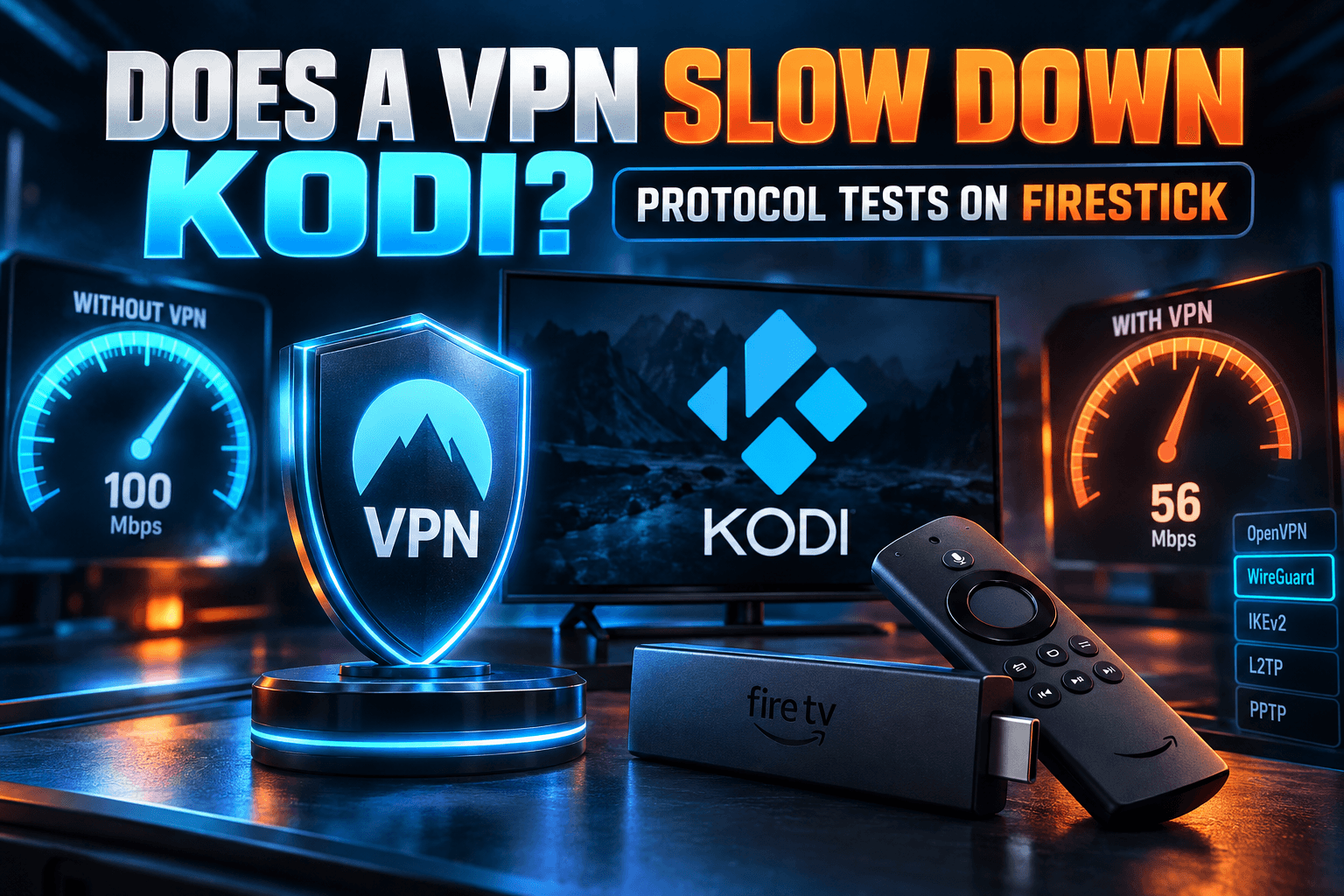
WireGuard-based protocols are consistently the lightest on a Firestick’s CPU. OpenVPN is noticeably heavier. I break down the protocol differences in Does a VPN Slow Down Kodi? Protocol Tests on Firestick, and those results carry over to ClipBox. If on-device overhead is too much, running the VPN on your router moves the encryption work off the stick entirely.
Should You Install It? My Verdict and Safer Alternatives
So, is ClipBox APK safe? A verified, clean build acts like a fairly ordinary aggregator. The catch is that clean builds are hard to find, the sources break all the time, and the app hasn’t seen steady development in years. [DATA: your final one-to-two sentence personal verdict based on your test results]
Who ClipBox Makes Sense For
Tinkerers. People who’ll actually verify the APK and run it on a secondary device, not the main living-room box. It also fits anyone comfortable with Pi-hole-style monitoring and the legal gray areas in their country. Not you? Fine. There are easier options.
Lower-Risk Alternatives Worth Trying
- Stremio with a debrid service: an open, actively maintained app built around addons. It’s far more stable than scraper APKs. Debrid services typically run around $3–4/month, and the same legal caveats apply to whatever addons you install.
- Free legal services: Pluto TV, Tubi, and Plex’s free tier all sit in the Amazon Appstore and Google Play. No sideloading. No permission headaches. Catalogs vary by region, and Tubi is strongest in the US and Canada.
- Vetted IPTV players: TiviMate or IPTV Smarters work with any legitimate provider subscription you already pay for.
Replacing a different dead app? My OnStream APK alternatives roundup goes deeper on more options.
One 2026 note. Amazon’s newer Vega OS devices, starting with the Fire TV Stick 4K Select from late 2025, can’t sideload Android APKs at all. If you’re buying new hardware specifically for apps like ClipBox, stick with Fire OS models or a Google TV box. Double-check the spec sheet before you order, because Amazon’s naming doesn’t make the difference obvious.
⚖️ Legal Disclaimer: IPTV Wire does not own or operate any streaming service, application, or website mentioned in this article. We do not verify whether third-party services carry proper licensing. Users are responsible for ensuring they comply with copyright laws in their jurisdiction.
Frequently Asked Questions
Is ClipBox APK safe to install on a Firestick?
That depends entirely on the build. Verify the signing certificate, scan the file on VirusTotal, and revoke unnecessary permissions once it’s installed. Plenty of third-party copies come repackaged with adware, so where you download it matters more than the app name.
Why does ClipBox say no links found?
Usually the scraper sources are dead, or your ISP is blocking them. Try another title, switch your DNS to 1.1.1.1, and make sure you’re on the newest legitimate build.
Does ClipBox work on Android TV and Google TV?
Yes. It runs on Android TV and Google TV devices like the Shield and the Onn 4K Pro. Both have 3GB of RAM against the Firestick’s 2GB, so they typically handle it better.
Do I need a VPN to use ClipBox?
No, the app works without one. A VPN hides your domain activity from your ISP and can get past DNS-based blocks, at the cost of some speed. WireGuard keeps that cost lowest.
Is ClipBox legal to use?
The app itself only aggregates links. Streaming copyrighted content without permission may be illegal depending on your country. Check your local laws, since you’re responsible for what you stream.
How do I know if my ClipBox APK is the real version?
Compare the package name and SHA-256 signing certificate against copies from other sources using apksigner or APK Analyzer. Oversized files, inflated version numbers, and “Mod” or “Premium” labels are all red flags.
What is the best alternative to ClipBox in 2026?
For a lot of users, Stremio paired with a debrid service is the most stable choice. Pluto TV, Tubi, and Plex are the easiest legal picks, since they install straight from official app stores.
Comments
Leave a comment
Your email address will not be published. Comments are moderated before they appear.